Using Theta Waves and Binaural Beats Safely in Client Work
Theta waves, binaural beats and healing frequencies have moved from the fringes of wellness culture into mainstream therapeutic practice.
Meditation teachers use them to help clients access deeper states. Hypnotherapists layer them beneath induction work to support trance. Energy healers pair them with hands-on treatment to facilitate emotional release and nervous system regulation.
But with that growing popularity comes a responsibility: frequency-based music isn't just "relaxing background sound." When used intentionally, it can influence brainwave patterns, alter states of consciousness and bring suppressed emotional content to the surface. That means it needs to be used thoughtfully, with informed consent and an understanding of both its potential benefits and its contraindications.
Many practitioners are drawn to frequency work because it offers a way to support clients without relying solely on verbal guidance or physical intervention. The music does some of the work—gently nudging the nervous system toward coherence, helping the brain shift out of hypervigilant beta states into more receptive alpha and theta ranges, or supporting the deep rest that allows integration to happen.
But not every client is a good candidate for frequency-based music, and not every session benefits from it. This guide explores what theta waves and binaural beats actually do, when and how to use them safely in professional practice, and how to navigate the ethical and practical considerations that come with working at the intersection of sound, neurology and consciousness.
If you want a more nuts‑and‑bolts, frequency‑by‑frequency breakdown after this primer, we go deeper into the 4–6 Hz "golden zone" in Why 4–6 Hz Theta Waves Are the Golden Zone for Deep Healing.
What Theta Waves and Binaural Beats Actually Are
Before we talk about application, it's worth clarifying what we're actually working with. Theta waves are a naturally occurring brainwave pattern, measurable via EEG, that occurs at a frequency of roughly 4–8 Hz. This is the state you move through as you drift off to sleep, the realm of deep meditation, lucid dreaming, hypnagogic imagery and access to subconscious material. In theta, the logical, analytical mind quiets, and the brain becomes more receptive to suggestion, visualization and emotional processing.
Binaural beats are an auditory phenomenon that occurs when two slightly different frequencies are played separately into each ear (usually via headphones). For example, if you play a 200 Hz tone in the left ear and a 207 Hz tone in the right ear, the brain perceives a third "phantom" tone oscillating at 7 Hz—the difference between the two frequencies. This 7 Hz beat falls within the theta range, and some research suggests that sustained exposure can encourage the brain to entrain, or synchronize, its own brainwave patterns to that frequency.
It's important to understand that binaural beats don't force brainwave states—they invite them. A client who is highly anxious, caffeinated or resistant to the process isn't going to drop into deep theta just because you're playing a 6 Hz binaural track. But for clients who are open, relaxed and in a safe environment, frequency-specific music can act as a gentle neurological guide, making it easier to access states that might otherwise take significant practice or time to reach.
Beyond theta, practitioners also work with other frequency ranges: alpha waves (8–12 Hz) for relaxed focus and light meditation, delta waves (0.5–4 Hz) for deep sleep and cellular healing, and even gamma waves (30–100 Hz) for peak cognitive performance and integration work. Each range supports different therapeutic goals, and part of skilful practice is knowing which frequency to use for which client and which phase of the work.
The Research: What We Know and What We Don't
The scientific evidence on brainwave entrainment is still evolving. A 2019 meta-analysis published in Psychological Research found that binaural beats can produce modest but measurable effects on anxiety reduction, working memory and subjective relaxation, particularly when used in theta and alpha ranges. A 2020 study on theta-range audio stimulation during meditation found that participants reported deeper subjective trance states and showed increased theta activity on EEG compared to control groups using ambient music without frequency targeting.
However, the research also shows significant individual variability. Some people are highly responsive to binaural beats and report profound shifts in state and awareness; others notice little to no effect. Factors that seem to influence responsiveness include baseline brainwave patterns, neurodivergence, trauma history, openness to the practice and even whether someone naturally tends toward visual versus auditory processing.
What this means for practitioners is that frequency-based music is a tool, not a guarantee. It can meaningfully support your work with some clients, and it may do very little for others. The key is to position it accurately—not as a magic bullet or scientifically "proven" intervention, but as an evidence-informed, potentially helpful addition to the container you're already creating through your presence, skill and therapeutic relationship.
It's also worth noting that much of the commercial "healing frequency" world leans heavily on pseudoscientific claims—promises that 528 Hz will "repair DNA" or that 417 Hz will "release trauma" are not supported by peer-reviewed research, even though many clients and practitioners report subjective benefits from working with these frequencies. As professionals, we can honour those subjective experiences without making unsupportable medical or neurological claims.
When to Use Frequency-Based Music in Client Sessions
Theta waves and binaural beats are most useful in contexts where you're already working with altered states, deep relaxation or subconscious material. Here are some scenarios where frequency-based music for practitioners can meaningfully support your work:
Deep meditation or mindfulness sessions where you want to help clients move past surface-level relaxation into genuine theta-range states. Many meditation teachers find that theta music shortens the time it takes for clients to "drop in," especially for beginners who struggle to quiet mental chatter.
Hypnotherapy and trance work, where theta frequencies align with the brainwave state you're already guiding clients toward during induction and deepening phases. The music acts as a neurological cue that supports the descent into trance.
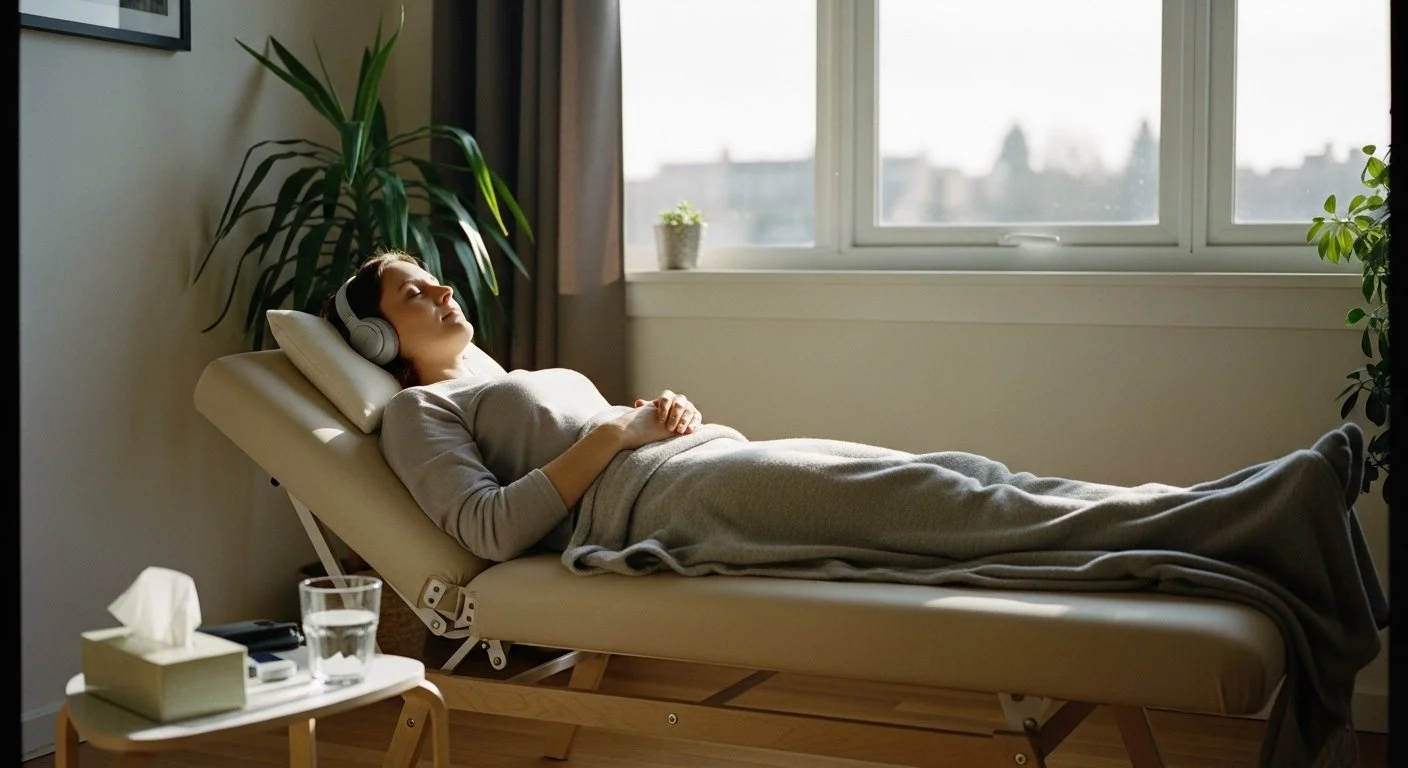
Energy healing, Reiki and somatic therapy, where clients are lying still for extended periods and you want to support parasympathetic activation, emotional release or access to body-stored memory. Theta and delta frequencies can help clients move out of hypervigilant beta states and into the receptive, healing-conducive states your hands-on work requires.
Integration work after psychedelic therapy, breathwork or other high-intensity practices, where theta music can support the consolidation of insights and help clients process what emerged during the experience. Some integration coaches use alpha-range music (8–12 Hz) for this purpose because it supports reflective awareness without pushing clients back into deep altered states.
Sleep coaching and insomnia support, where delta-range frequencies (0.5–4 Hz) can help clients' nervous systems shift out of wired, anxious patterns and into the deep rest states necessary for restorative sleep.
If you’re building a sleep‑support offer around this, it helps to separate "deep‑healing theta" from true sleep work, which is why we keep our theta tools distinct from the delta‑based approach in Delta Waves and Deep Sleep: How Music Supports Your Client’s Nervous System and reach for delta whenever the primary goal is rest, not insight.
In all these contexts, the music is supporting work you're already doing—it's not a standalone intervention. Frequency-based music works best when layered into a coherent therapeutic container that includes your presence, skill, informed consent and attunement to what the client's nervous system is actually doing in real time.
When Not to Use Theta Waves or Binaural Beats
Frequency-based music isn't appropriate for every client or every situation. Here are some contraindications and cautions to be aware of:
Clients with epilepsy or seizure disorders. Auditory and visual stimulation at certain frequencies can trigger seizures in susceptible individuals. While the research on binaural beats specifically is limited, the general principle of caution applies. Always ask about seizure history during intake, and if a client has epilepsy, avoid frequency-specific music unless you have explicit clearance from their neurologist.
Clients in acute psychological crisis or experiencing active psychosis. Theta-range music can loosen psychological boundaries and bring subconscious material to the surface, which is therapeutic in stable contexts but potentially destabilising for someone in crisis. If a client is actively suicidal, manic, or experiencing a psychotic episode, your priority is stabilisation and referral, not altered-state work.
Clients with unprocessed trauma who aren't in ongoing therapeutic support. Theta states can facilitate trauma processing, but they can also open the floodgates before someone has the resources to integrate what comes up. If you're not trained in trauma therapy and a client discloses significant trauma history, either refer them to a trauma specialist or work only with very gentle, grounding frequencies (low alpha, upper theta) that support regulation without pushing into deeper material.
Clients who explicitly don't want frequency-based music. Some people are philosophically or spiritually uncomfortable with the idea of "manipulating" brainwaves, and some simply don't like how it feels. Informed consent matters. Always explain what you're using and why, and give clients the option to work with regular ambient music or silence instead.
During active, movement-based practices. Binaural beats require headphones to work as intended, which makes them impractical for yoga, dance therapy or any modality where the client is moving. Frequency-specific music played through speakers loses the binaural effect (since both ears hear both tones), though it may still offer some ambient benefit. If you're working with music for yoga, breathwork or movement practices, prioritise rhythm, tempo and grounding qualities over frequency entrainment.
How to Introduce Frequency Work to Clients
If you're integrating theta waves or binaural beats into your practice, transparent communication is essential. Many clients have heard of "healing frequencies" through wellness influencers or YouTube videos but don't understand what they actually are or how they work. Others may be sceptical or concerned about safety.
Here's a simple framework for informed consent around frequency-based music:
Explain what it is in plain language. "The music I use includes specific frequencies designed to support your brain in shifting into deeper, more relaxed states. It's a bit like how a gentle rocking motion can help a baby fall asleep—it's not forcing anything, but it's offering a rhythm your nervous system can sync with if it feels safe to do so."
Be honest about what the research does and doesn't show. "There's some scientific evidence that binaural beats can help with relaxation and focus, and a lot of people report feeling like they drop into meditation more easily with this kind of music. It doesn't work for everyone, and it's not a replacement for the other work we're doing together—it's just one supportive element."
Ask about contraindications. "Before we start, I need to check: do you have any history of epilepsy or seizure disorders? Are you currently in psychological crisis or experiencing any symptoms like hallucinations or intrusive thoughts? If yes to either, we'll use different music today."
Offer an opt-out. "If at any point the music feels uncomfortable or you'd prefer to work in silence or with regular ambient sound, just let me know. There's no pressure to use frequency-specific music if it doesn't feel right for you."
This kind of transparent framing positions you as a thoughtful, ethical practitioner and helps clients feel empowered and informed rather than passive recipients of a technique they don't understand.
Practical Considerations: Volume, Duration and Delivery
Even when frequency work is appropriate, how you deliver it matters. Here are some practical guidelines:
Volume should be low. Just like with hypnotherapy or Reiki work, frequency-based music should be audible but never dominant. If the music is too loud, clients will focus on it consciously rather than allowing it to work beneath the threshold of awareness.
Longer exposure is generally more effective than short bursts. Brainwave entrainment takes time—research suggests that sustained exposure of at least 10–15 minutes is necessary for measurable effects, with deeper entrainment occurring after 20–30 minutes. If you're using theta music, plan for sessions that are long enough to allow the nervous system to actually shift, not just skim the surface.
Headphones are ideal for binaural beats, but not always practical. True binaural beats require stereo separation (different tones in each ear), which means headphones or earbuds. However, many clients find headphones uncomfortable during bodywork, and they're impractical for group sessions. If you're playing music through speakers, you're essentially working with frequency-embedded ambient music rather than true binaural beats—still potentially helpful, but not delivering the same neurological entrainment effect.
Match the frequency to the phase of the session. If you're working with a modality that has distinct phases—induction, deepening, active work, integration—consider using music that mirrors that arc. You might start with alpha (8–12 Hz) for the opening and settling phase, move into theta (4–8 Hz) for the deep work, and return to alpha or even low beta for emergence and integration.
The same volume and mixing rules apply if you’re recording meditations that use entrainment: if you’re layering these frequencies under your own voice, it’s worth following a simple, repeatable method for blending music under guided meditation without your voice disappearing so the soundbed supports the work instead of competing with it.
Combining Frequency Work With Other Modalities
Frequency-based music rarely stands alone—it's most effective when integrated into a broader therapeutic or healing context. Here's how it pairs with common modalities:
Meditation and mindfulness: Theta and alpha frequencies can help clients bypass the initial mental chatter phase and drop into meditative states more quickly. Particularly useful for beginners or clients with high baseline anxiety.
Hypnotherapy: Theta-range music aligns perfectly with trance induction and deepening work. Many hypnotherapists report that clients reach deeper trance states faster when theta frequencies are used during the induction phase.
Breathwork: Use cautiously. Active, high-intensity breathwork (holotropic, shamanic) is already pushing clients into altered states, so adding theta music can be redundant or overwhelming. Slower, regulatory breathwork (box breathing, 4‑7‑8) pairs well with alpha or low-theta frequencies for grounding and coherence.
Somatic therapy and trauma work: Frequency music can support the window of tolerance by helping clients stay regulated during somatic processing. Delta and low-theta ranges can be particularly grounding for clients who tend toward hyperarousal. However, avoid using it with clients who are new to somatic work or who have complex trauma without adequate support structures in place.
Energy healing (Reiki, acupuncture, craniosacral): Clients are often lying still for 30–60 minutes, which makes frequency work highly accessible. Many energy practitioners use specific healing frequencies like 528 Hz or 417 Hz because they align with chakra work or energetic intention, though it's worth remembering that these correspondences are based more on tradition and subjective experience than empirical neuroscience.
Navigating the Commercialised "Healing Frequency" World
If you've spent any time researching theta waves or healing frequencies, you've probably encountered bold claims: "528 Hz repairs DNA!" "963 Hz connects you to the divine!" "This frequency will clear all your trauma!" These claims are everywhere in the wellness space, and they can make it difficult to separate evidence-informed practice from marketing hype.
As a practitioner, it's important to hold a nuanced position. Yes, many clients and practitioners report profound subjective experiences with specific frequencies. Yes, there are traditional systems (solfeggio tones, chakra frequencies, planetary tunings) that have been used for centuries and carry deep meaning for many people. And yes, the placebo effect is real, and belief in a tool's efficacy can genuinely contribute to its therapeutic impact.
But that doesn't mean we should make unsupportable scientific claims. Saying "some people find that 528 Hz music supports heart opening and emotional release" is honest and appropriate. Saying "528 Hz repairs DNA at a cellular level" is not supported by peer-reviewed research and crosses into pseudoscience.
Your role as a practitioner is to offer frequency work as a tool grounded in both emerging neuroscience and lived experience, not as a miracle cure or scientifically "proven" intervention. When you position it thoughtfully and transparently, clients can make informed choices about whether it's something they want to explore, and you build trust as someone who respects both evidence and mystery without conflating the two.
Building a Frequency-Based Music Library for Your Practice
If you're integrating frequency work into your practice, it's helpful to have a small, curated library of tracks you return to consistently. This creates familiarity and allows you to match music to different client needs, session types or therapeutic goals.
A basic frequency music library might include:
A theta-range track (20–40 minutes) for deep meditation, trance work or emotional processing sessions.
An alpha-range track (20–30 minutes) for relaxed focus, light meditation or integration work.
A delta-range track (40–60 minutes) for sleep coaching, deep rest or sessions where you're supporting profound nervous system recovery.
A frequency-specific piece (15–30 minutes) if you work with solfeggio tones (417 Hz for release, 528 Hz for heart-centred work) or chakra frequencies and want to align your music with specific energetic intentions.
Once you've found music that works, use it consistently. Part of the therapeutic benefit of frequency work comes from repetition and familiarity—your own nervous system learns to associate certain sounds with certain states, and regular clients begin to drop into those states more quickly because the sonic environment has become a trusted cue.
If you’re also publishing these pieces on YouTube, Insight Timer or inside paid programs, it’s worth double‑checking that your licences cover every channel—our simple licensing guide for meditation music walks through the fine print so your frequency catalogue is legally clean everywhere it lives.
FAQ: Using Theta Waves and Binaural Beats With Clients
What are theta waves and how do they work in healing sessions?
Theta waves are brainwave patterns (4–8 Hz) associated with deep meditation, light sleep and access to subconscious material. Music designed to support theta states can help clients shift out of anxious, hypervigilant beta patterns and into more receptive, healing-conducive states. The effect is invitational, not forced.
Are binaural beats scientifically proven?
Research shows modest but measurable effects on anxiety, relaxation and subjective trance depth, but results vary significantly between individuals. Binaural beats are evidence-informed, not "proven" cures. They work best as one supportive tool within a broader therapeutic container.
Do clients need headphones for binaural beats to work?
Yes, for true binaural beats. The effect requires different frequencies in each ear, which means stereo headphones or earbuds. If you play binaural music through speakers, it becomes frequency-embedded ambient music but loses the specific entrainment effect.
Is it safe to use theta waves or binaural beats with all clients?
No. Avoid with clients who have epilepsy, seizure disorders, active psychosis or acute psychological crisis. Use cautiously with trauma survivors who aren't in ongoing therapeutic support. Always get informed consent and offer opt-outs.
How long should clients listen to theta or binaural music for it to be effective?
At least 10–15 minutes for measurable effects, with deeper brainwave entrainment occurring after 20–30 minutes of sustained exposure. Plan sessions long enough to allow the nervous system to actually shift states.
Can practitioners use healing frequencies like 528 Hz or 417 Hz in professional sessions?
Yes, as long as you frame them accurately. Many clients and practitioners report subjective benefits from solfeggio frequencies, but avoid making unsupported scientific claims about DNA repair or trauma clearance. Position them as tools that support intention and subjective experience, not medical interventions.
Do you need a licence to use frequency music in recorded sessions or online programs?
Yes. If you're creating meditation recordings, hypnosis audio products or online programs that include frequency-based music, you need a commercial-use licence. Free YouTube tracks or "personal use" music don't cover professional distribution; practitioner-focused libraries like Melobleep issue licences that explicitly cover client work, apps and platforms like YouTube and Insight Timer.