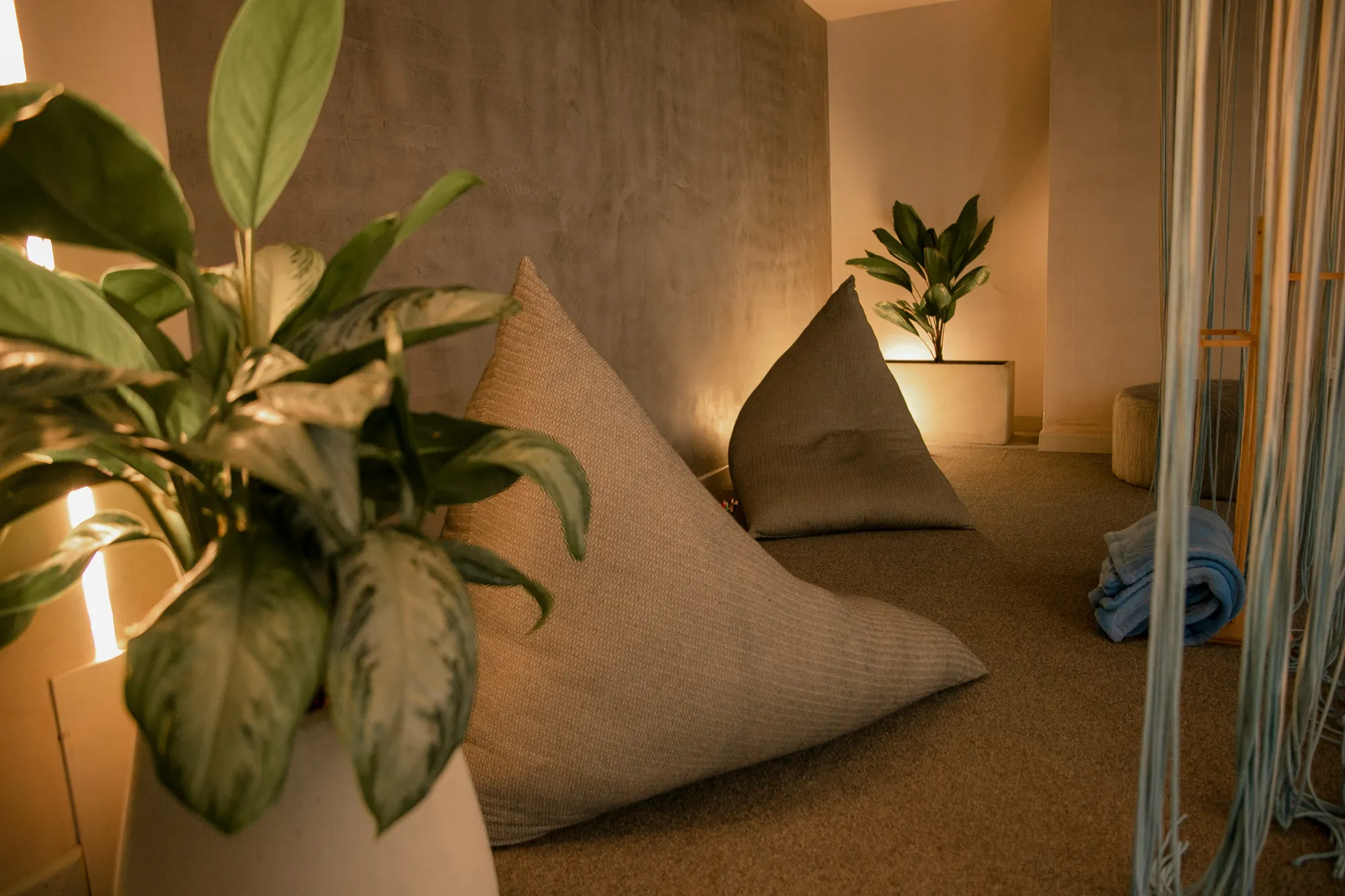
Why Reiki Practitioners Need Predictable, Low-Distraction Music

Reiki sessions live in a paradox: you're facilitating profound change in stillness.

The client is lying completely motionless, often with their eyes closed, in an altered state where their awareness becomes hypersensitive to every subtle shift in the environment—including the music. What might seem like a gentle, beautiful soundscape to you as the practitioner can become a source of distraction, discomfort or even subtle agitation for a client whose nervous system is doing deep processing work.

Many Reiki practitioners discover this the hard way. They choose music that feels calming and supportive in their own meditation practice, only to notice mid-session that the client's breathing has become shallow, their body has tensed, or they seem restless rather than settled. Often, the culprit isn't that the music is "bad"—it's that it's interesting. A beautiful melody, an unexpected chime, a subtle shift in key or tempo—any of these can pull a client's attention outward at exactly the moment you need them dropping deeper inward.

This is fundamentally different from choosing music for yoga, meditation or even hypnotherapy sessions. In those contexts, there's some level of structure, guidance or movement to anchor attention. In Reiki, there's nothing but stillness, your hands, and the music. That means the music carries far more weight than most practitioners realise—and it needs to be chosen with an understanding of how the nervous system responds to sound during deep rest states.

This guide explores why predictability matters more than beauty in Reiki music, how to recognise when music is subtly disrupting your sessions, and what to look for in tracks that truly support hands-on healing work.

What "Predictable" Actually Means (And Why It Matters)

When we say music needs to be predictable for Reiki, we're not talking about boring or repetitive in the negative sense. We're talking about music that allows the client's mind to stop tracking external stimuli and fully surrender to the internal experience.

Predictable music has a few key characteristics:

  • Minimal melodic movement. There's no catchy tune to follow, no musical "story" unfolding. The harmonic progressions are slow, gentle and often circular—returning to the same tonal center rather than constantly modulating to new keys. This creates a sense of safety and containment rather than novelty or surprise.

  • Consistent dynamics. The volume and energy stay stable throughout. There are no crescendos, sudden quiet moments or dramatic builds that would require the client's nervous system to recalibrate or their attention to re-engage.

  • Stable sonic texture. The instrumentation and "feel" of the music don't change dramatically. If the track starts with soft pads and drones, it continues with soft pads and drones. There are no unexpected instruments entering, no rhythmic patterns emerging partway through, no shifts in the emotional tone.

  • Slow, almost imperceptible evolution. The music can change over time—in fact, it should to avoid feeling static—but those changes happen so gradually that the conscious mind doesn't register them as "events." It's like watching the sky shift from day to dusk: you know it's happening, but you can't point to the exact moment the change occurred.

Why does this matter? Because a client in a Reiki session is in a vulnerable, highly receptive state. Their conscious defenses are down, their analytical mind is quiet, and their nervous system is processing at a level that doesn't involve words or thoughts. In this state, anything that feels unpredictable—even subtly—can trigger a micro-stress response. The brain's surveillance system (the part that's always scanning for threats) notices the change and pulls just a tiny bit of attention back toward external monitoring instead of allowing full surrender.

You might not see this consciously. The client probably won't say "that music was distracting." But you might notice they take longer to settle, they don't drop as deep, or their body holds tension throughout the session instead of progressively softening.

If you’d like a more step‑by‑step breakdown of how to apply these principles inside real sessions, we go deeper into specific track choices, frequencies and layouts in How to Use Music in Reiki and Energy Healing Without Distracting Sensitive Clients.

The Problem With "Beautiful" Ambient Music

Many Reiki practitioners gravitate toward ambient music that's been composed as standalone listening experiences—tracks you'd find on meditation playlists, new-age albums or streaming services labelled "relaxation" or "healing." These tracks are often gorgeous: rich harmonic textures, evocative soundscapes, emotionally moving compositions. The problem is they're designed to hold a listener's attention, not to dissolve into the background while someone else's hands are doing the real work.

Here's what often happens with listener-focused ambient music in a Reiki context:

  • Melodic hooks pull attention outward. If the music has a recognisable melody—even a very simple one—the client's brain will start following it. This creates a subtle split in attention: part of them is tracking the music, part of them is trying to stay present to the sensations of the session. That split prevents the deep letting-go that allows Reiki to work most effectively.

  • Emotional complexity can overwhelm. Music that's designed to evoke strong feelings—awe, sadness, joy, longing—can trigger emotional responses that the client isn't prepared to process in the middle of a treatment. Reiki often brings emotional material to the surface naturally; adding emotionally charged music on top of that can push someone past their window of tolerance.

  • Unpredictable elements create micro-vigilance. A distant bird call in a nature soundscape. A sudden chime. A shift from major to minor tonality. A brief moment of silence before the next phrase. Any of these can cause the nervous system to subtly orient toward the sound, checking whether it's significant, whether it means something, whether it requires attention.

None of this is conscious. The client isn't lying there thinking "this music is distracting." But their body is responding, and those responses accumulate over a 60-minute session. The result is that they don't drop as deep, they don't release as fully, and you both leave the session feeling like something was slightly "off" without being able to name what it was.

The solution isn't to stop using music—it's to use music that's designed for this specific context. Music created for Reiki and hands-on healing work tends to emphasise drones, long sustained tones, very simple harmonic textures and minimal variation—not because that's inherently "better" music, but because it serves the work you're doing.

How Frequency and Volume Affect Nervous System States

Two often-overlooked factors in Reiki music are frequency range and volume, both of which have direct impacts on nervous system regulation.

Frequency range refers to whether the music emphasises low, mid or high tones. Lower frequencies (sub-bass, deep drones, warm pads in roughly the 80–250 Hz range) tend to support parasympathetic activation—the "rest and digest" state that's essential for healing work. Higher frequencies (bright chimes, bells, flutes, synth leads above ~2,000 Hz) can feel activating or even agitating, particularly for clients with trauma histories or highly sensitive nervous systems.

This doesn't mean you should avoid all high-frequency content, but it does mean the music should be grounded in lower frequencies with higher tones used sparingly as gentle accents, not as dominant features. Many Reiki practitioners find that music emphasising grounding frequencies creates a more stable, embodied experience for clients who struggle to settle or who tend toward anxiety and hypervigilance.

Volume is even more critical. Music that's at a perfectly comfortable level when you're setting up the room can feel surprisingly loud once a client is in a deep rest state and their auditory sensitivity has increased. What registers as "soft background music" to you—moving around the room, mentally tracking the session, staying in practitioner mode—can feel overwhelming to someone lying still with their eyes closed and their defenses down.

The general rule: Reiki music should be barely audible. Present enough to mask minor environmental sounds (footsteps, traffic, HVAC hum) and create a sense of sonic containment, but never loud enough that it becomes a focal point. Many experienced practitioners describe their ideal volume as "music at the edge of hearing"—clients notice it when they first lie down, but once they drop into the session it fades into the background of perception.

If you've ever had a client seem restless, unable to settle, or emerge from a session saying they couldn't fully relax, volume is one of the first things to check. Try turning your music down 20–30% lower than feels natural to you and see if the quality of your sessions shifts.

When Nature Sounds Work (And When They Backfire)

Many Reiki practitioners love using nature soundscapes—ocean waves, rain, forest ambience—and clients often request them. There's something primal and soothing about natural sounds, and they can absolutely work in the right context. But they also come with specific risks that aren't present in pure musical ambient tracks.

The main issue is unpredictability. Real nature sounds are full of variation: a sudden bird call, a wave crashing louder than the others, a gust of wind, a branch snapping. These variations are part of what makes nature beautiful and alive when you're experiencing it directly. But in a Reiki session, where the client is in a highly receptive altered state, unpredictable sounds can trigger the nervous system's surveillance response.

The brain hears the bird call and has to briefly assess: Is that significant? Is that a threat? Do I need to pay attention? Even though the conscious answer is "no, it's just a bird, I'm safe," that micro-moment of assessment pulls attention outward and prevents the full surrender that deep healing work requires.

When nature sounds work best:

  • Consistent, rhythmic sounds like steady ocean waves, gentle rain or continuous streams.

  • Heavily processed or synthesised nature sounds that have been smoothed out and looped so they feel more like ambient textures than literal field recordings.

  • Clients who explicitly request them and have positive associations with those sounds from their own life experience.

When nature sounds backfire:

  • Unpredictable or sporadic elements like bird calls, insect sounds, thunder or wind gusts.

  • Clients with trauma histories who may have negative associations with certain environments.

  • Mixed soundscapes that combine many elements at once (rain + birds + wind + thunder), increasing the sense of unpredictability.

If you love using nature sounds, the safest approach is to choose tracks with very simple, consistent patterns and to use them only with clients who've explicitly said they find those sounds grounding. For everyone else, pure musical ambient tracks—drones, pads, soft harmonic textures—tend to be more universally supportive.

Session Length and the Danger of Short Loops

Most Reiki sessions run 45–60 minutes, with some practitioners offering shorter (30 minutes) or longer (90 minutes) treatments. Whatever your session length, your music needs to cover the full duration without looping.

Looping is particularly problematic in Reiki because clients in altered states are hypersensitive to repetition. Hearing the same musical phrase cycle back around—even if it's subtle—can create a sense of being stuck, can pull attention back to the music, or can trigger frustration in clients who are working hard to quiet their minds.

The solution is to use extended, non-looping tracks—ideally single pieces composed as continuous journeys rather than shorter tracks stitched together. Many music libraries designed for practitioners offer tracks in the 30–60 minute range specifically to cover full session lengths without repetition.

If you must use shorter tracks, choose ones that are long enough (20+ minutes minimum) that a client in a 60-minute session only hears each piece two or three times, and use crossfade transitions so there's no jarring silence between tracks. But the gold standard is a single, seamless soundscape that carries the entire session from arrival through hands-on work to completion.

If you’re starting to build a small catalogue for your Reiki work, it can help to think in a few standard durations and build around a simple set of track lengths that cover the sessions you actually run so you’re never forced into looping a piece that pulls clients out of depth.

How to Tell If Your Music Is Subtly Disrupting Sessions

Not every client will tell you if the music feels off. Many people assume that if the practitioner chose it, it must be "right," and they internalise any discomfort as their own inability to relax. Here are some signs that your music might be quietly working against your sessions:

  • Clients take longer than expected to settle.

  • You notice micro-tension patterns during the session—small furrowing of the brow, jaw clenching, fingers twitching, breath catching.

  • Clients report feeling like they couldn't "turn off their mind."

  • Feedback includes phrases like "the music was beautiful but…"

  • You feel like you're working harder than usual to create a settled container.

The best test: try doing a few sessions with very minimal, drone-based music or even silence, and notice whether the quality of the work shifts. If clients settle faster, drop deeper and report more profound experiences, your previous music—however beautiful—may have been creating subtle interference.

Building a Reiki Music Library That Serves Your Practice

Rather than using the same track for every session, consider building a small library that allows you to respond to different client needs, session types or your own intuitive sense of what a particular treatment is calling for.

A basic Reiki music library might include:

  • A grounding, low-frequency track (45–60 minutes) for clients who are anxious, highly activated or new to energy work and need extra nervous system support.

  • A neutral, mid-range ambient piece (45–60 minutes) that works for most clients in most contexts—your "go-to" track when you’re not sure what specific energy the session needs.

  • A slightly brighter, heart-centered track (30–45 minutes) for clients doing emotional processing work or for sessions focused on heart chakra or upper body healing.

  • A very sparse, drone-based track (60+ minutes) for advanced clients who are comfortable in deep stillness or for trauma-informed work where you want maximum predictability and minimum stimulation.

  • A frequency-specific piece (30–60 minutes) if you work intentionally with solfeggio tones (417 Hz for release, 528 Hz for heart work) or other healing frequencies as part of your practice.

Once you've found tracks that consistently work, use them repeatedly. There's value in your own nervous system becoming familiar with the sonic container you're creating—you'll relax more fully into your practitioner presence, and regular clients will begin to associate those sounds with the safety and depth of your treatment space.

And as soon as you start recording sessions or sharing these tracks beyond the treatment room, it’s worth running your library past a simple licensing guide for meditation and healing music so you know every piece you use in Reiki recordings is legally clean.


FAQ: Music for Reiki Practitioners

What makes music "predictable" for Reiki sessions?

Predictable music has minimal melodic movement, consistent dynamics, stable sonic texture and slow evolution. It allows clients to stop tracking external stimuli and fully surrender to the internal experience without their nervous system needing to monitor for changes.

Why can't we just use beautiful ambient music from Spotify?

Most ambient music is composed as standalone listening experiences designed to hold attention, not to dissolve into background during hands-on healing. It often has melodic hooks, emotional complexity or unpredictable elements that subtly pull clients' attention outward.

Should we use nature sounds or musical tracks for Reiki?

Musical tracks (drones, pads, harmonic textures) tend to be more universally supportive because they're predictable. Nature sounds can work if they're consistent and rhythmic (steady rain, ocean waves) but can backfire if they include unpredictable elements like bird calls or thunder.

How loud should Reiki music be?

Barely audible—present enough to create a sonic container and mask minor environmental sounds, but never loud enough to become a focal point. Think of it as "music at the edge of hearing": clients notice it initially but it fades to background once they drop in.

What frequency range is best for Reiki music?

Music grounded in lower frequencies (sub-bass, warm pads in roughly the 80–250 Hz range) tends to support parasympathetic activation and grounding. High frequencies (bright chimes, bells above about 2,000 Hz) can feel activating and are best used very sparingly.

How long should Reiki music tracks be?

Long enough to cover your full session without looping—ideally 45–60 minutes. Loops are particularly disruptive in Reiki because clients in altered states are hypersensitive to repetition. Extended, non-looping tracks designed for session-length work are ideal.

Can we use silence instead of music for Reiki sessions?

Yes. Silence can be deeply powerful, especially for advanced clients or trauma-informed work. However, music can help mask environmental sounds and create a sense of containment for clients who find silence uncomfortable or exposing. The key is matching the soundscape—or lack of it—to each client and session.

Luke Tyler

Marketing all-rounder. Passionate about creativity, AI and music production.

https://melobleep.com
Previous
Previous

Can I Use Meditation Music on Insight Timer? A Licensing Breakdown

Next
Next

5 Track Lengths Every Meditation Teacher Should Have in Their Library