


The Practitioner's Guide to Royalty-Free Music for Meditation
Licensing, Clinical Fit & Curated Soundscapes for Your Practice
You found the perfect track. Calm, spacious, exactly the mood your session needs. Then the doubt arrives — can you actually use this?
In a recording you sell. In a course. On Insight Timer. Or is this the kind of thing that gets your video muted, your account flagged, or a message from someone claiming you owe them money?
Most practitioners using music in their work have never had a clear answer to that question. They assume the music is fine because it was labelled "royalty-free." That assumption is dangerous.
This guide is for you. We'll explain what royalty-free music for meditation really means, where the hidden licensing gaps are, what makes music clinically suitable for session work, and how to choose tracks you can use across every part of your practice without looking over your shoulder.

What "Royalty-Free" Actually Means
Royalty-free does not mean free.
It means you pay once and owe no ongoing royalties for continued use. No per-play fees. No annual renewals. No cut of your course sales. You license the music once, and the right to use it is yours.
That part is widely understood. Here's the part that isn't.
Royalty-free describes the payment model. It says nothing about what you're allowed to do with the music. Two tracks can both be "royalty-free" and grant completely different rights. One might cover a monetised YouTube video but forbid putting the music in a downloadable product. Another might allow background use but prohibit any recording where your voice sits on top.
The label tells you how you pay. The licence tells you what you can actually do. For a practitioner, the licence is everything.
Why Specific Music Matters for Meditation Work
Many practitioners reach for generic "spa" music or ambient playlists from popular streaming services. Well-intentioned, but it misunderstands what the music has to do in a session.
A meditation track isn't there to be pleasant. It's there to hold a state. That places demands on it that consumer relaxation music was never built to meet.

Hold a Stable State
The music must sustain a long, even arc so a client settles and stays settled — no swells or shifts that pull them back to the surface.

Sit Under the Voice
If you guide or narrate, the music has to leave room for your voice rather than competing with it for attention.
Run the Full Length
A session needs music built to last its duration — not a short video cue stretched and looped to fill the time. Generic stock music rarely does any of these. It was designed for a timeline, not for a nervous system.

Avoid Leading the Emotion
A strong melody or bright major lift can feel incongruous to someone processing something difficult. The music supports; it doesn't direct.

The Restrictions Hiding in Most Meditation Music Licences
Most royalty-free libraries were built for video creators. Their licences are written for someone making a YouTube video or a corporate explainer — not for someone recording a guided meditation, selling a sleep course, or playing a 60-minute bed in a live room. That mismatch creates gaps. The most common ones are worth knowing before you buy.

Resale and Redistribution
Many licences let you use the music but forbid distributing it as part of a product someone else downloads.
If you sell a guided meditation as an MP3, your client downloads a file containing that music. Some licences quietly prohibit exactly this — which means the core thing you do may breach the terms you never read.
The "Background Only" Clause
A common clause states your own content — your voice, your teaching — must be the primary product, and the music only supporting it.
Fine for a guided meditation. A problem if you sell a pure music track for clients to use at home, where the music is the product.

Platform and Editing Gaps
A licence might cover YouTube but say nothing about Insight Timer, meditation apps, or your own membership site. Silence in a licence is not permission.
Looping, trimming, or layering a track can also count as creating a derivative work, and some licences restrict it. If you need a 45-minute version of a 10-minute track for a long session, that detail decides whether you're allowed.
Attribution Requirements
Free and Creative Commons sources often demand a credit. That credit becomes part of your product — your brand carrying someone else's name.
None of these are exotic edge cases. They are standard clauses in licences practitioners use every day, having never read past the words "royalty-free."
Navigating Royalty-Free Music Licensing for Your Practice
When you play music during a paid session — in person, in a group, or in a recording you sell — you're using it for a commercial purpose. A personal Spotify or Apple Music subscription explicitly forbids this. Those licences are for personal, non-commercial use only.
Using unlicensed music in your practice is copyright infringement. The risk of a lawsuit may seem remote, but it undermines your professionalism and leaves you exposed.
So when you assess any source, ask these questions before you buy. Does the licence explicitly cover client recordings and downloadable products — not just streaming or background video use? Does it name the platforms you actually use, or stay silent and leave you guessing? Can you record your voice over the music — a right with a proper name, synchronization rights, that a licence should grant plainly? Is it perpetual, or does it expire or cap you by audience size or number of sales?
A good royalty-free licence from a reputable source gives you three things: legal peace of mind with clear documentation, professional integrity through fairly compensating the work, and simplicity — pay once, use it in your practice indefinitely.
If a source can't answer those questions clearly, the price doesn't matter. You're buying uncertainty.
Curated Melobleep Collections for Meditation Practitioners
You don't have time to sift through thousands of generic tracks, vetting each one against the criteria above. That's why Melobleep is built differently.
Melobleep is a practitioner-first sound library. The music is engineered for therapeutic use, and the licence is written for how practitioners actually work — one purchase, perpetual, no attribution, covering live sessions, downloadable products, courses you resell, monetised YouTube, Insight Timer, and apps. No restriction by audience size, platform, or number of sales.
Every toolkit also includes a Voice-Ready mix — a version with a strategic EQ dip and lower loudness so your voice sits clearly on top without fighting the music. If you record guided sessions, that one feature is the difference between a recording that sounds professional and one that sounds muddy. Most generic libraries don't offer it at all.
The library is organised by what you're doing in the room, not by genre:
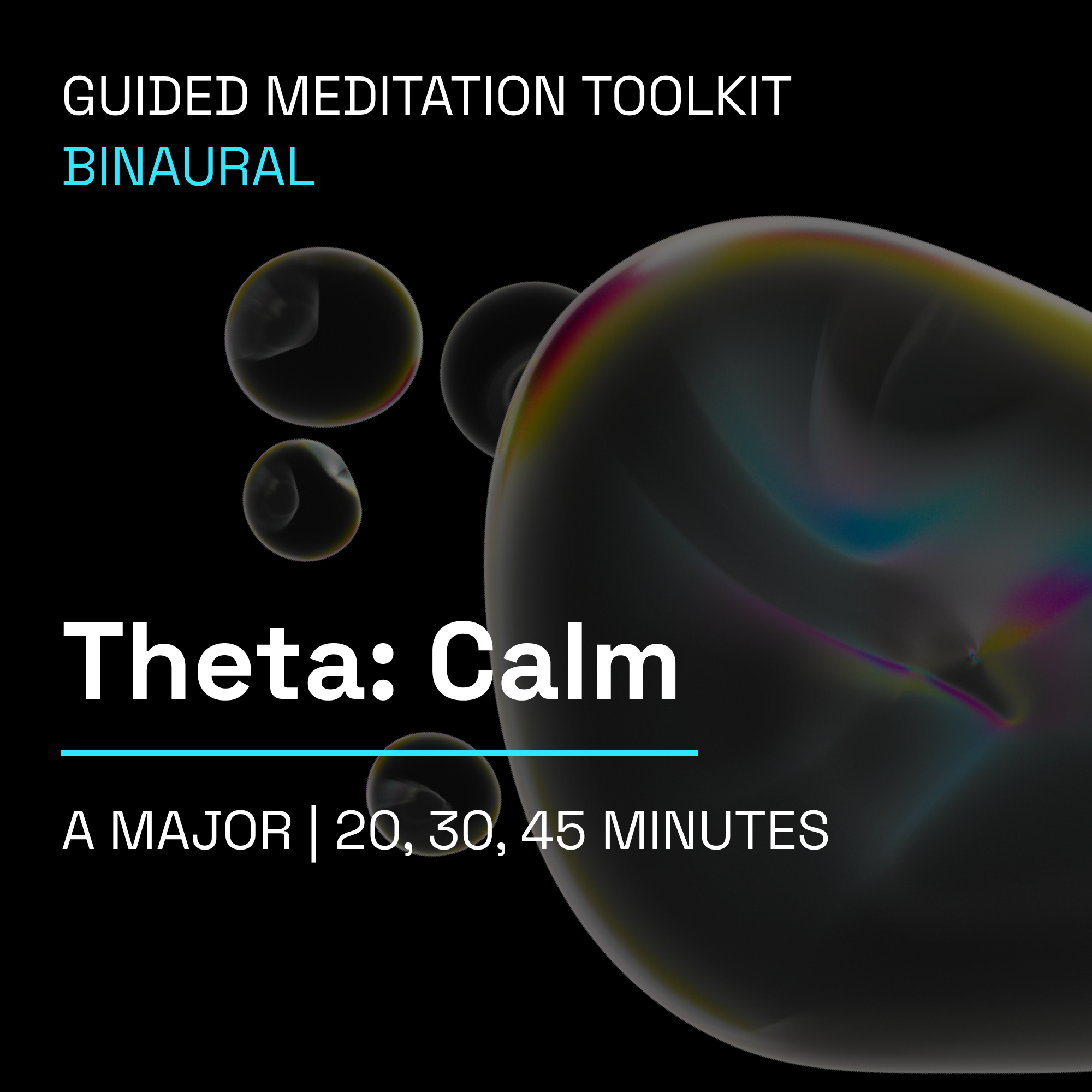
Theta Calm holds a session in a warm, safe theta state — ideal for hypnotherapy, yoga nidra, and regression work.
Alpha Heart Center keeps the nervous system regulated without inducing sleep, built for active visualisation and group facilitation.
528 Hz Love holds a room across a full energy-healing session, for Reiki and heart-centred meditation.
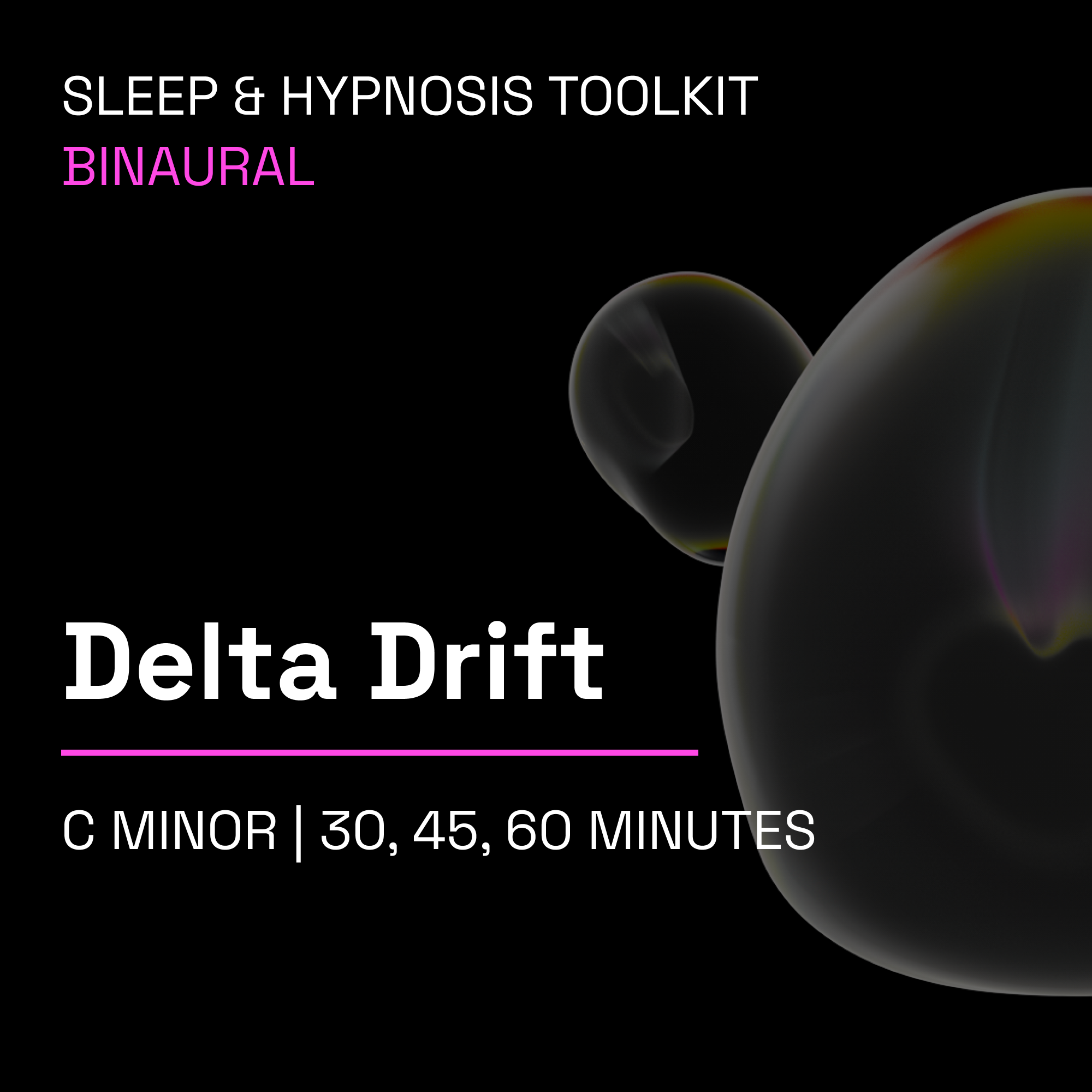
Delta Drift carries a client from wind-down into deep sleep with no noticeable transitions, for sleep coaches building downloadable products.
Each is a complete toolkit, not a single track — multiple session lengths, full music mixes for live playback, Voice-Ready mixes for recordings, studio-grade WAVs and fast MP3s, and the commercial licence.
Explore Melobleep's Meditation Music Collections & Get Your Commercial License
Integrating Music into Your Sessions
Having the right music is the first step. Using it skilfully is the second.
Match the Track to the State
Choose for what the session needs to do — a regulated, alert state for active work; a deep, transition-free bed for sleep or trance. The toolkit names map to states for exactly this reason.
Mind the Voice
If you narrate, use the Voice-Ready mix and keep the music low enough to feel like part of the room, not a performance sitting over your words.
Use it for Transitions
Fading a track in can signal the shift from check-in to the work itself. A different, gentle bed at the end supports integration and the transition back out.
Let Silence Have a Place
For some clients, especially those with auditory sensitivity, silence is the most supportive choice. Music is a tool, not a requirement.
Your clinical intuition is the best guide. The goal is to use sound as one more way to support the client, attuning to their needs moment by moment.

The Professional Choice for Your Practice
Royalty-free is a payment model, not a permission slip. The word on the label tells you how you pay; only the licence tells you what you can do. For a practitioner embedding music into products and recordings that last for years, that distinction is the whole game.
Choose music built for the work and licensed for the way you actually work. Then you can stop reading the fine print and get back to your practice.