417 Hz Release
$45
Bilateral music moves sound slowly from one ear to the other. EMDR and trauma-informed practitioners use it as a gentle form of auditory bilateral stimulation. This page is for trained clinicians choosing music for their sessions.
417 Hz Release sweeps a soft texture left and right over a steady drone, in 15, 30 and 60-minute versions. Somatic Safety has no movement at all, for grounding before or after processing.

Bilateral music is music that moves between the left and right ear. With headphones on, the listener hears the sound travel from side to side at a steady pace.
In EMDR, this left and right rhythm is one form of bilateral stimulation, along with eye movements and tapping. The method was developed by Francine Shapiro. NICE and the World Health Organization both recommend EMDR as a treatment for PTSD.
The evidence for sound on its own is thinner. Some lab studies have found that eye movements load working memory more than tones do. So it's sensible to treat bilateral music as one option among several, and to use it within your training.
What the music can do well is give a steady, calm container for the work. That's what I build it for.
For setup in the room and online, see my guide on how to use bilateral music in EMDR sessions.
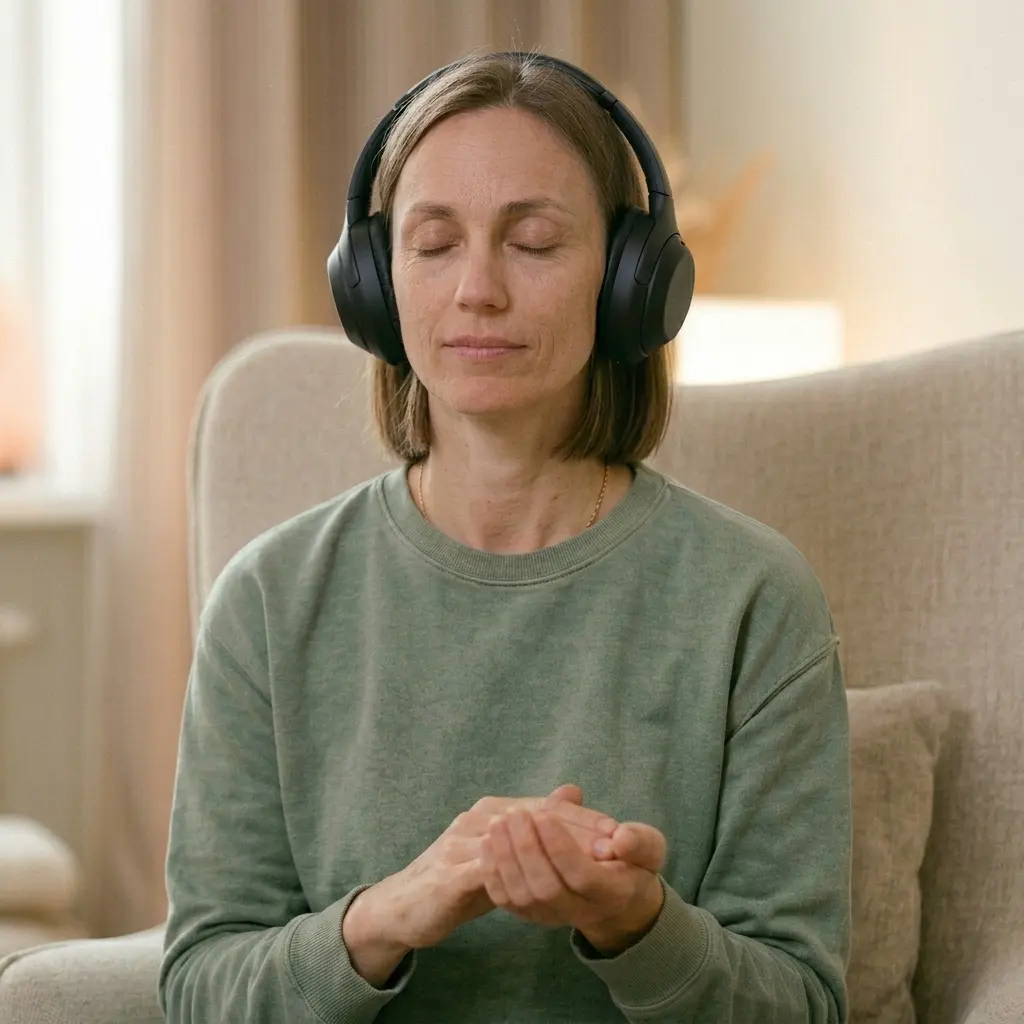
Your client wears headphones while you guide the set. The drone stays steady, so nothing in the music competes with what comes up.
Your client plays the track on their own headphones while you work over video. Ask them to check left and right first.
The licence lets you record calming or resourcing audio for a client. Check that home use fits their treatment plan first.

Cleared for clinical work and client recordings.
One purchase covers you and anyone who works in your practice, for good. It covers sessions in person and online, and audio you record for clients. It doesn't cover all-day background play in a waiting room, and it can never be used to train AI.
Music that moves between the left and right ear at a steady pace. You hear it best through headphones. In EMDR it's used as one form of auditory bilateral stimulation.
It's gentle and played at low volume, but it belongs inside a proper treatment plan. EMDR should only be delivered by a trained clinician. Start quietly, check in often, and stop if a client feels overwhelmed.
Not really. Room speakers blend the left and right sides, so the movement is mostly lost. Over speakers, 417 Hz Release still works as a calm drone.
Binaural beats play a slightly different tone in each ear, and the brain hears a slow pulse between them. Bilateral music moves sound from side to side. They do different jobs, and both need headphones.
The licence lets you record audio for your clients and give it to them. Whether home use is right is a clinical call. Many therapists keep it to calming and resourcing between sessions.
Every purchase comes with a licence certificate made out to your practice.
More for practitioners: Music for guided meditation Breathwork music Royalty-free meditation music